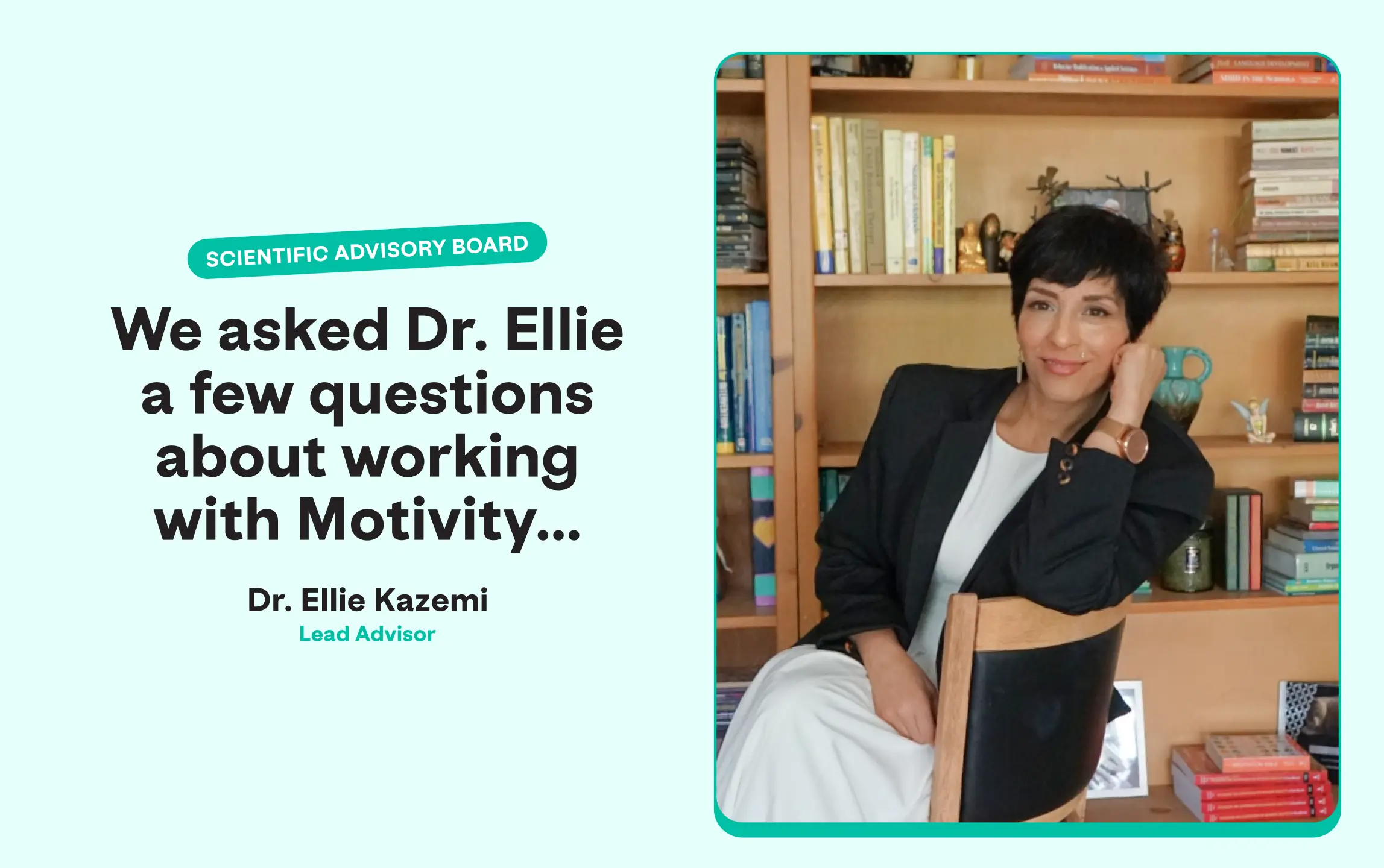
What made you decide to join Motivity as the first member of its Scientific Advisory Board?
Motivity stood out to me as a platform grounded in the real work of clinicians, with a clear commitment to quality through individualized data collection rather than one-size-fits-all solutions. I was drawn to the opportunity to help shape an advisory structure that brings together diverse expertise (clinical, scientific, operational, payor, and the voices of clients and families) to guide responsible, outcomes-focused innovation in ABA. Motivity’s receipt of over $11 million in NSF funding further signaled a serious investment in building thoughtfully, with research, rigor, and long-term impact at the center. Serving as the first advisor feels less like endorsement and more like stewardship, helping ensure growth remains field-informed as Motivity scales.
You work at the intersection of behavioral science and emerging technology. What potential do you see for platforms like Motivity to elevate clinical quality and outcomes?
The real potential lies in reducing the gap between what we know from science and what actually happens day to day in clinical settings. When data is timely, interpretable, and connected to decision-making, it becomes a support rather than a burden. Across my work, from advising platforms like Motivity to building applied learning and coaching systems through Transform VXR, I’ve seen that the greatest impact comes when data, feedback, and human interaction are designed together. Technology can surface patterns, support supervision and feedback loops, and make outcomes more visible—without replacing clinical judgment. Used well, it creates space for better conversations, stronger accountability, and more consistent quality across teams.
When you think about Motivity’s role in the future of ABA, what unique value stands out to you most?
What stands out most to me is Motivity’s commitment to building infrastructure that prioritizes individualized data and long-term quality. Their NSF funding reflects a serious investment in research and getting it right, and their evolution into a wraparound platform—seamlessly integrating practice management with clinical data collection—positions them uniquely in the field. Rather than prescribing how clinicians should practice, Motivity supports transparency, informed decision-making, and scalable growth by making outcomes visible and actionable without oversimplifying clinical complexity.
How do you see your guidance influencing Motivity’s roadmap in areas like AI, outcomes measurement, or scalable clinical workflows?
My role as Lead Advisor is not to design solutions, but to help shape the questions being asked and the perspectives included. Through advisory committee coordination and structured dialogue, I see my guidance influencing how decisions are informed, by bringing in diverse expertise, anticipating unintended consequences, and grounding innovation in real-world clinical, scientific, and organizational contexts. Especially in areas like AI and outcomes measurement, thoughtful governance and field input are critical to ensuring tools are useful, ethical, and aligned with practitioner realities.
What impact do you hope this advisory board will have on the ABA field more broadly?
I hope the advisory board becomes a model for how technology companies and the ABA field can engage in ongoing, bidirectional learning. Much of my work through Transform VXR has focused on helping organizations strengthen how people learn, lead, and work together in high-stakes, relationally complex environments. I see this advisory board as a natural extension of that effort, translating science into practice across organizational contexts. At its best, an advisory board doesn’t just advise a company, it helps elevate the field’s conversation about quality, outcomes, and innovation, strengthening the bridge between science, clinical practice, the voices of clients and families, and the systems and payors that shape care.