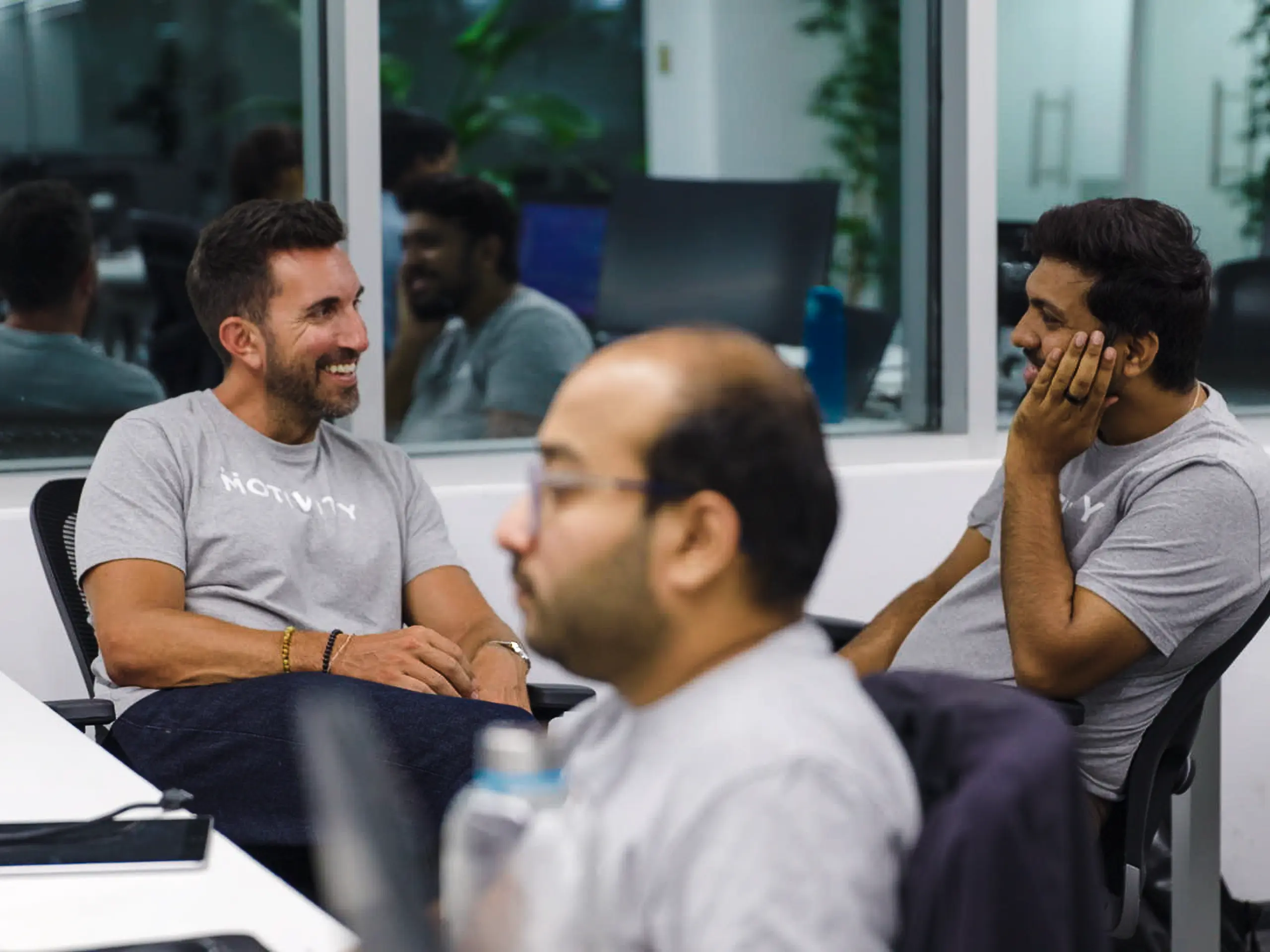
When Motivity acquired Calmanac, two teams on opposite sides of the world became one. And we thought, okay, we have to show people what that actually looks like. So we packed some cameras and flew to Pune, India.
They spent time in the office, sat in on meetings, ate amazing food, and talked to the engineers, analysts, and leaders who build the tools you use every day. The result is the first film in Connected, a series about the real people and real work behind Motivity.
I got to sit down with Brian Curley, our Chief Creative Officer, to talk about why we made this and what he hopes you get out of it.
____________________________________________________________________________________________________________________________________
Why a film series? What were you trying to show that traditional marketing couldn’t?
Connected was never meant to feel like a campaign. It was meant to feel real. Traditional marketing is good at telling people what a company does, but it rarely shows how people actually work together, solve problems together, and build trust across cultures and time zones.
What I wanted this series to capture was the human infrastructure behind Motivity. The conversations between meetings, the shared energy in the room, and the way ideas evolve when people from different backgrounds sit down together with the same mission.
You can write copy about collaboration and acquisitions all day long, but seeing it happen is different. Film lets people feel it instead of just hearing about it.
As someone who’s worked from a dozen different cities, what did seeing the Pune team confirm for you about how Motivity actually collaborates across time zones?
What stood out to me immediately was how aligned everyone already was before we ever stepped into the same room. That doesn’t happen accidentally. It comes from a culture where people genuinely communicate, trust each other, and care about the outcome more than credit. There was shared ownership, shared pride, and shared momentum. That’s rare.
What was the one thing about this team coming together you most wanted people to see?
The humanity of it. People often reduce tech companies down to products, systems, or workflows. But what actually moves innovation forward is people who care deeply about the mission and about each other.
I wanted people to see the warmth, the laughter, the respect in the room, and the curiosity between teams. Those things matter because they directly impact the quality of the work. When people feel connected to each other, they build better things for the families and clinicians we serve.
If someone in ABA watches this and walks away with one thought, what do you want it to be?
That the future of ABA shouldn’t feel fragmented. The best outcomes happen when clinicians, technologists, operations teams, and leadership are all moving together instead of working in silos. That’s what Connected is really about. It’s not just a story about Motivity, it’s a story about what becomes possible when amazing people align around improving care.
I’d want viewers to walk away feeling optimistic that our industry can still be deeply human while embracing innovation at the same time.
What’s next for Connected?
More stories and bigger conversations. This first chapter focused on connection across teams and geography, but there are so many layers we want to explore next like clinicians in the field, customer partnerships, the impact on families, and the people quietly shaping the future of behavioral health behind the scenes.
Connected is ultimately about documenting the culture and mission driving this company forward. As Motivity grows, those stories only become more important to tell.
____________________________________________________________________________________________________________________________________