I've been lucky enough to work with exceptional women leaders at different points in my career. In the past, however, those experiences were always one-on-one: a direct manager I admired or a mentor who changed how I thought about something. This is the first time I’ve worked in a place where that is also reflected across the entire leadership team of the company.
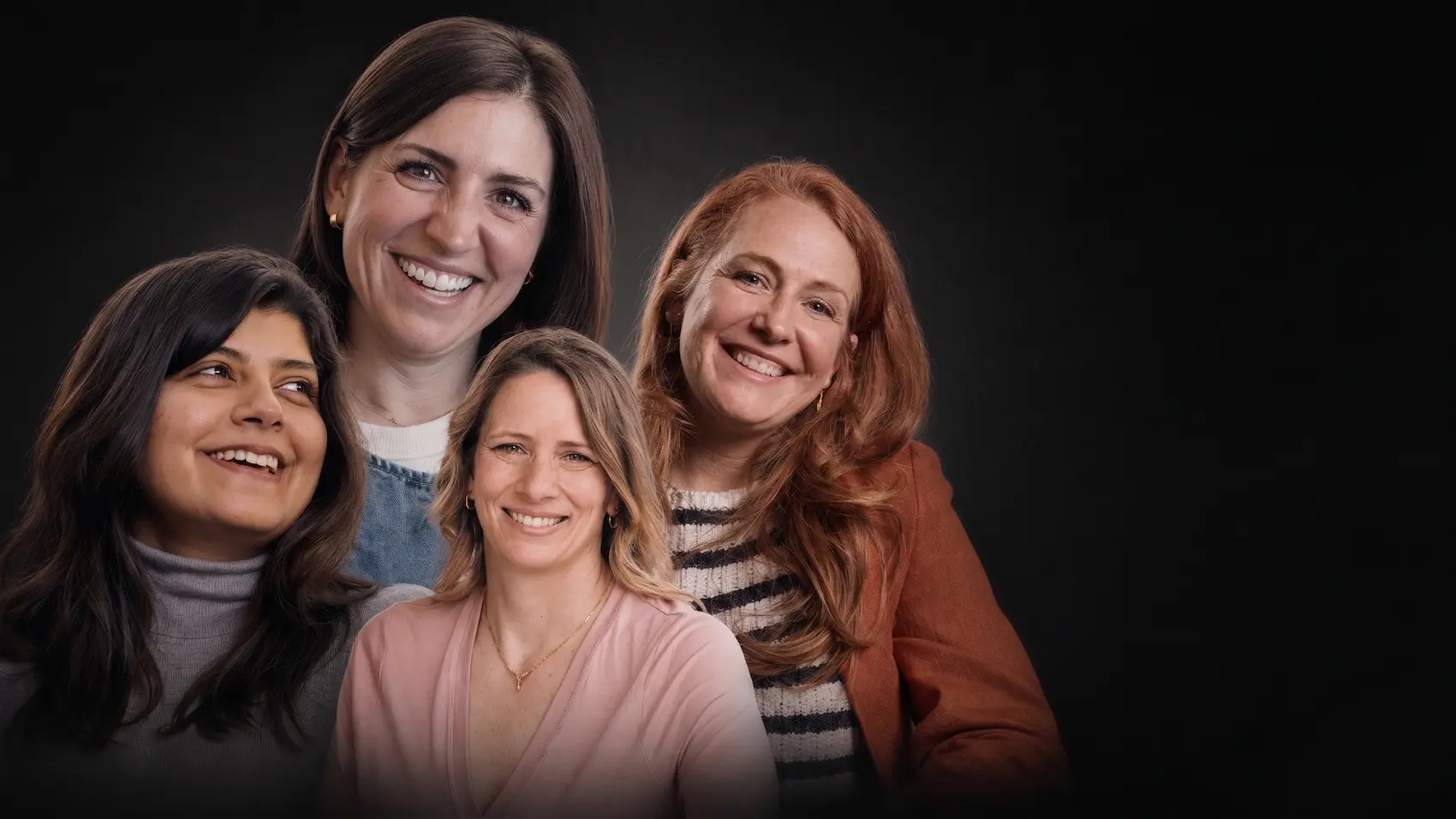
At Motivity, more than half of the executive leadership team are women. Six women lead clinical strategy, security, engineering, revenue, and marketing, and they do it from the U.S., India, and Latin America. Some have been in ABA for over twenty years, while others hadn't heard of it until life made them look.
I asked each of them a few questions. Their answers inspired me, and I hope they do the same for you.
When lived experience becomes the foundation
For many of the women leading Motivity, clinical expertise and personal experience are intertwined.
Christy Evanko, Director of People & Ops and Chief Security Officer, came to ABA through her son's diagnosis.
“The personal experience will shape everything. Your empathy, your patience with families, your understanding of why parents make the choices they do.”
But she's clear that personal experience isn't where the story ends.
“I came for my son. I stayed because the science is just that powerful. The science itself is extraordinary, and once you start to really understand behavior, the function of it, and the environment's role in it, it opens up in ways that go so far beyond what brought you in.”
Emaley McCulloch, Chief Clinical Officer, learned something similar early in her career. She believed that being rigorous and evidence-based meant maintaining a certain distance from families.
“I let go of the idea that doing the science right and truly understanding someone's context were the same thing."
Her own experience as a mother of a child on the spectrum revealed that gap.
Cecilia Pérez-Muskus, VP of Marketing, arrived at Motivity at a specific moment: right after the company had secured investment from Five Elms. She was also at her own inflection point, having just welcomed her first child.
"Growing my family reminded me of the importance I've always placed (but had more recently displaced) on focusing my work towards something that had a meaningful impact on the lives of families."
The personal stories of these women were the very foundation of their success as leaders.
The false choice between kindness and strength
You know that pressure in tech and in business leadership for performing a certain kind of authority that needs to be tough and unaffected? That’s not something I’ve seen at Motivity.
When asked what she'd say to a woman in tech who feels she has to choose between being kind and being taken seriously, Madhuri Mandaogade, General Manager of Practice Management, said:
“I'd tell her the false choice itself is the thing to let go of. Kindness and seriousness are not in tension—they're actually both grounded in the same thing, which is knowing yourself and not performing someone else's version of leadership. The alpha, risk-taker model works for some people. It was never going to work for me, and pretending otherwise would have just been dishonest. What I learned from women who came before me is that you can be gentle and get things done. You can be warm and still hold high standards. When I stopped trying to fake the traits I don't have and started trusting the ones I do, that's when people started actually following, not just complying.”
Neelam Chavan, Chief Technical Officer, echoes this when she talks about what she's learned from the women throughout her career:
“What I try to pass forward is permission: permission to lead without performing a version of leadership that doesn't fit you. And technically, I try to show the team here that this is a moment where geography, background, and even seniority matter less than they ever have. If a junior engineer in India can build something that impacts thousands of children in the United States because the tools now exist to do that, then the doors that looked closed are not as closed as they appeared. I want them to see that clearly.”
In an industry where leadership models are often narrow, giving people (and especially other women) permission to lead as themselves is not only refreshing, but also where true change begins.
Where clinical excellence meets product design
But as we know, good intentions alone don’t magically create good systems. Emaley is direct about this:
"I wish more ABA leaders were asking: are we building organizations where clinical excellence is actually enabled, or are we just making it harder to ignore?"
She describes the difference between organizations that talk about outcomes and ones that have the infrastructure to support them.
"The business side has to work for the clinical side to have room to breathe. That connection doesn't happen automatically just because we care."
Madhuri saw this same principle play out differently when she moved into tech.
"Good technology, in the world I came from, meant efficiency: deadlines met, performance optimized, elegant workflows, and features shipped reliably."
But developing software for ABA providers taught her something different.
"Coming into ABA, I quickly realized that 'good' here means something more. The hardest part is not simply making a workflow faster. It is making an extraordinarily complex operation feel simple without removing the controls that keep care compliant, billable, and sustainable."
She describes a single therapy session as a web of dependencies: treatment plans, authorizations, provider credentials, supervision requirements, scheduling rules, payroll, clinical documentation, billing.
"Good technology is not technology that exposes its sophistication. It is technology that absorbs complexity on behalf of the user."
Human connection over automation
Jenelle Kelly, Chief Revenue Officer, brought that tech mindset with her when she joined Motivity.
“In tech, the default mindset is often to automate every interaction and scale as fast as possible. Automation and scale are valuable tools when applied correctly, but working alongside BCBAs has reminded me that technology should enhance human connection, not replace it. BCBAs have taught me the power of a personal touch and reinforced the importance of leading with curiosity: to slow down, ask thoughtful questions, and truly understand the human experience on the other end before exploring automation.”
That human-first orientation is also evident in Motivity’s culture. For Jenelle, being a mother while leading revenue at a company where many other leaders are also parents has shaped what she expects from a workplace.
“It’s allowed me to be both a mom and a leader without feeling like those roles are at odds (most of the time!). I’ve found working alongside other parent-leaders creates a culture rooted in mutual respect—where you’re treated like an adult, trusted to manage your priorities, and empowered to extend that same trust to your colleagues.”
Cecilia thinks about this constantly when it comes to Motivity as a brand. She learned early on that trust can't be manufactured.
"When the work you're doing ultimately affects a child, a family, or the people providing their care, the brand has to reflect a real understanding of the responsibility that comes with that. That means being close to the community you're serving, listening before assuming you know what people need, and being thoughtful about the language you use."
What remains when you lead this way
When I asked Neelam what she's proud of at Motivity, she didn't talk about headlines.
“The thing I'm most proud of is probably the rules engine underneath the whole platform, the part no one sees. When we built ConCred, we built a configurable rules structure—payer contracts, credentialing requirements, compliance guardrails—all talking to each other. It wasn't glamorous, but that foundation meant every module built on top of it—scheduling, billing, RCM—inherited that structure. Clean data in, clean data out. It's the 20% of the system generating 80% of the value. Practices today get faster claims and fewer audit problems, most with no idea it's because of decisions made years ago. That's exactly how it should be.”
That's the kind of leadership these women are modeling. The type that doesn't need huge credits because the work speaks for itself.
Christy sees this play out in how Motivity operates day-to-day. The company applies behavioral science principles to its own culture in ways most people don't immediately recognize.
“We train managers to only give feedback on observable, specific behavior, not interpretations, intentions, or character. That distinction comes directly from ABA, where the precision of behavioral description is foundational to any effective intervention. We just applied it to how managers talk to their teams. We also are very intent on making sure our managers are providing as much, if not more positive feedback (reinforcement) than corrective feedback. It can’t be all about what people are doing wrong; there has to be a way to shape current behaviors and celebrate how amazing our people really are.”
If reading their words left you curious, wait until you see them on camera. Hear more about their journeys, and those of other women at Motivity, in the latest episode of our Connected series: