Your waitlist is full. You have families wanting to start. Yet somewhere between the inquiry and the first scheduled ABA session, a few of them disappear.
Maybe they went with another ABA practice, or the paperwork felt overwhelming and they never came back to finish it. Either way, a child who needed services didn't get them, and your practice absorbed that revenue loss without ever knowing exactly where it happened.
The families who don't make it through intake rarely call to tell you why, nor leave a review. They just stop responding.
What Happens Inside ABA Intake That Makes Families Walk Away
For most ABA practices, the intake process just evolved. It wasn't designed. A family calls or submits a contact form, then someone on your team sends them an email with a PDF or a link to a form tool. The family opens it, starts filling it out, gets interrupted, and plans to finish later. Later doesn't always come.
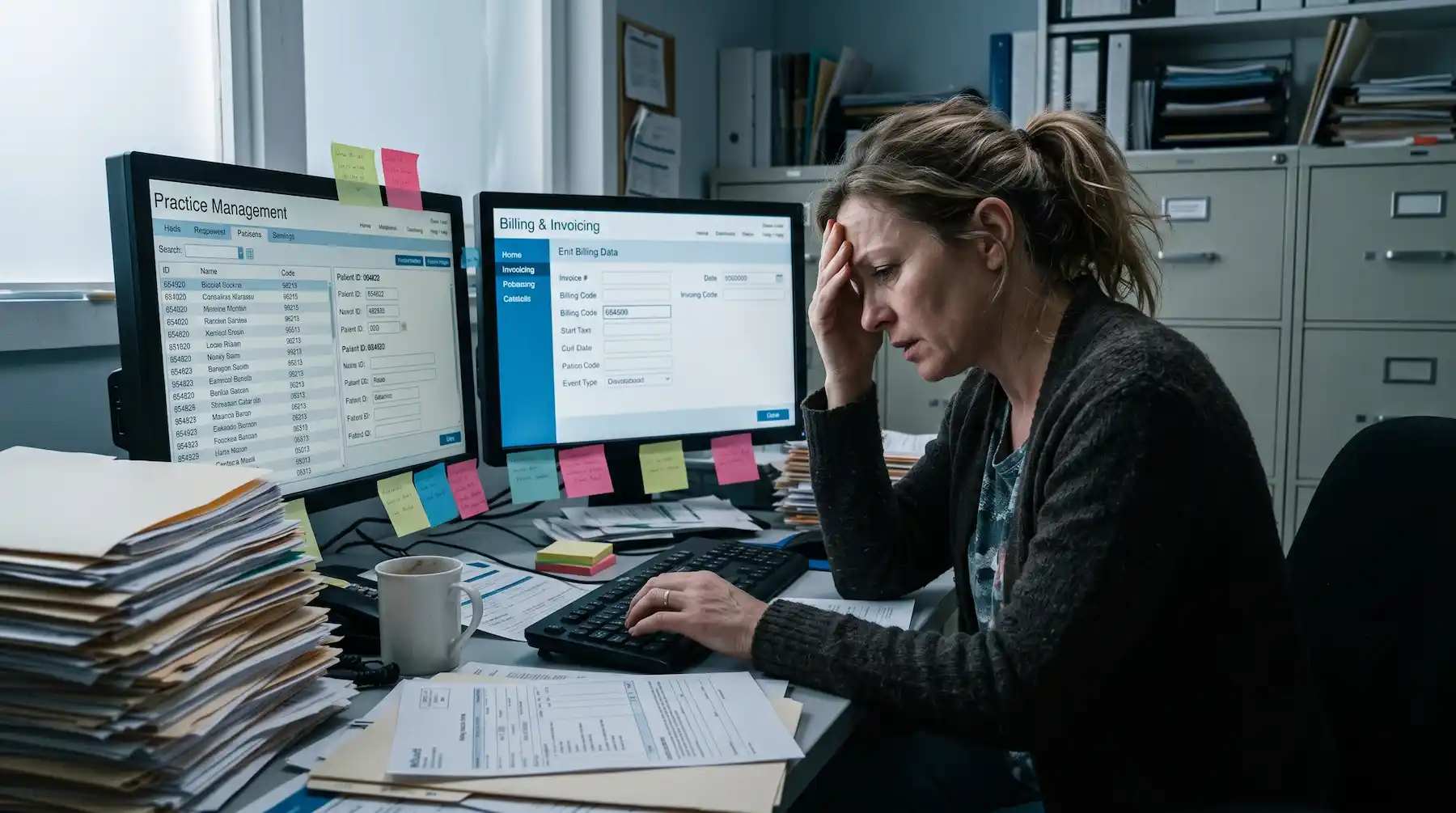
If they do complete it, your admin re-enters the data into your ABA practice management system. Someone else follows up on the missing insurance card. A third person runs an elegibility check. And at every one of those handoff points, there's an opportunity for the process to stall, and for the family to reconsider whether it’s worth the effort.
For a family that has spent months navigating a diagnosis, insurance approvals, and ABA provider searches, a friction-heavy intake process is often the last straw.
Families Who Don't Hear Back Fast Lose the Momentum It Took Them Months to Build
When a family submits a referral, they're carrying months of evaluations, insurance calls, and paperwork behind them. That momentum is fragile. A slow response gives them one more reason to put off a process that already feels tiring.
When your team is handling sessions, authorizations, and a billing queue, "I'll follow up on that inquiry" becomes something that happens when there's bandwidth. And bandwidth is not a reliable intake strategy.
Follow-up ends up depending on whoever has a free moment between sessions and authorization management, which means it happens inconsistently.
ABA Intake Paperwork Sent by Email Has a Completion Problem
Long intake forms sent via email have a real completion problem, and most ABA practices have no visibility into it.
A family receives a PDF on a Tuesday evening. They open it, see twelve pages, and plan to finish it over the weekend. Then the weekend arrives and life happens. By the time someone on your team notices the forms haven’t come back and reaches out, a week has passed, and the family has already scheduled a tour with a different ABA practice that made onboarding feel more manageable.
Multi-step intake processes compound this. When families have to complete one round of documents before receiving the next, every waiting period is another moment where momentum can break and another moment where a competitor with a smoother process can step in.
What makes this particularly costly is that these families weren't lost to a lack of demand or a clinical mismatch. They wanted services but were lost in the friction.
What ABA Practices Lose When Families Stall Mid-Intake
The financial cost of intake attrition is hard to see precisely because it shows up as absence: the client who didn't onboard, the slot that sat open, the the RBT who was never assigned a case.
ABA practices running with active waitlists can't afford to lose prospects to administrative friction. But that's what's happening when intake is slow, manual, and invisible to your team.
When ten families stall mid-intake, that's ten potential client relationships your practice never got to build, and ten revenue streams that never started.
And that's before accounting for what those stalled families cost your team internally—in staff hours, data entry errors, and hiring decisions made without reliable numbers.
Your clinical outcomes might be genuinely strong. Your BCBAs® might be among the best in the region. But the first thing families experience at your practice isn't a therapy session. It's a PDF attachment and a waiting period. And if that experience feels like too much work, many of them won't get to the session at all.
ABA Practices That Track Every Family's Intake Status Lose Fewer of Them
For many ABA practices, there's no reliable way to know how many families are currently stalled in intake. They don't know which step in the process has the highest drop-off rate, or which referral sources send families who actually complete onboarding versus the ones who go quiet after the first email.
When that data doesn't exist, the only thing you can do is react by following up with each family individually and hoping the timing works.
When intake is centralized, questions that used to require digging through emails have straight answers. Which families haven't moved in 72 hours? Which referral sources actually bring families who complete the process? How many new learners are realistically starting next month? That last one is especially important because when the answer comes from a live dashboard, your clinical director can plan the growth of the practice around it.
More Follow-Up Emails Won't Fix a Broken ABA Intake Process
When fewer families are making it through intake, it’s normal to feel the urge to add more touchpoints such as reminder emails, follow-up calls, or checklists. But reaching out to families without eliminating the friction won’t make them feel more committed.
ABA practices that get more families to that first session got there by making the process easier to complete for families and for the team managing it.
When forms are digital, status is visible, and data doesn't have to be moved manually between platforms, the friction that was losing families disappears.
Motivity's Intake Module connects your patient portal, your prospect tracking, and your practice management system. Families complete onboarding through a guided digital process and your team has one place to see exactly where every family stands, so follow-up happens on purpose. And when intake is complete, scheduling, billing, and clinical records already have the data they need without having to ask for it.
Want to see what that looks like? Book a demo and we'll walk you through it.